

Spotted Lanternfly
Spotted Lanternflies are an invasive insect that are becoming increasingly common throughout Massachusetts and are now being reported in areas of New Hampshire. While they do not bite or harm people, large populations can become a significant nuisance and can affect trees, shrubs, and other plants.
If you have noticed unusual insects gathering on your trees, sticky residue on your deck or vehicle, or black sooty mold developing on plants beneath a tree, you may be seeing signs of Spotted Lanternfly activity.
At Port City Tree Care, our Certified Arborists can help identify Spotted Lanternflies, assess the level of activity on your property, and recommend appropriate treatment and management options.
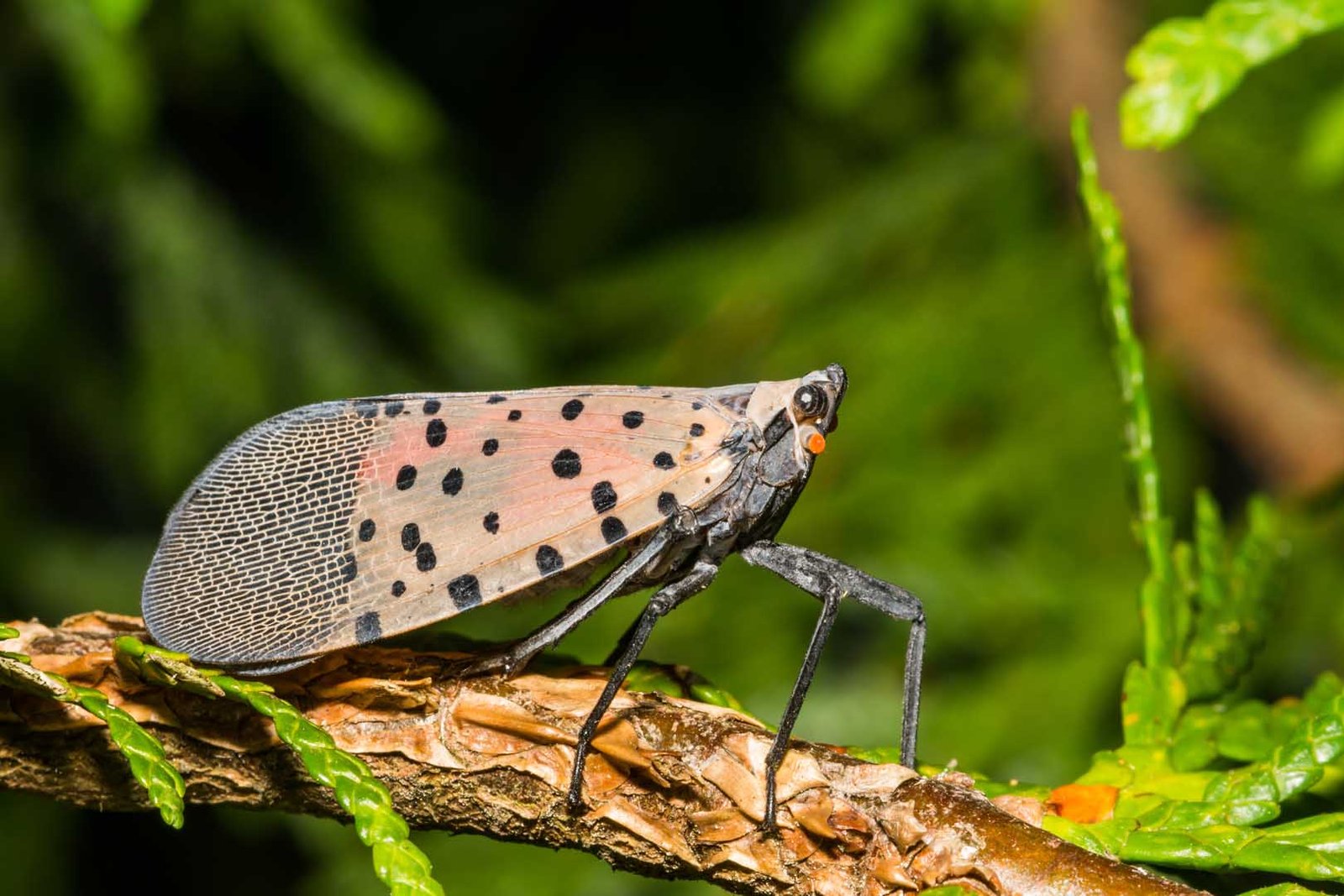
The Spotted Lanternfly is an invasive insect that can be surprisingly easy to recognize once you know what to look for. Adult Spotted Lanternflies are about the size of a quarter or slightly larger and have wings with distinctive markings.
Spotted Lanternflies do not bite people and are not considered a threat to human health. Their primary concern is their impact on plants and the nuisance they can create as their populations increase.
Spotted Lanternflies are often found in groups. You may see only a handful of insects on a tree, while areas with high populations can have dozens or even hundreds at once.
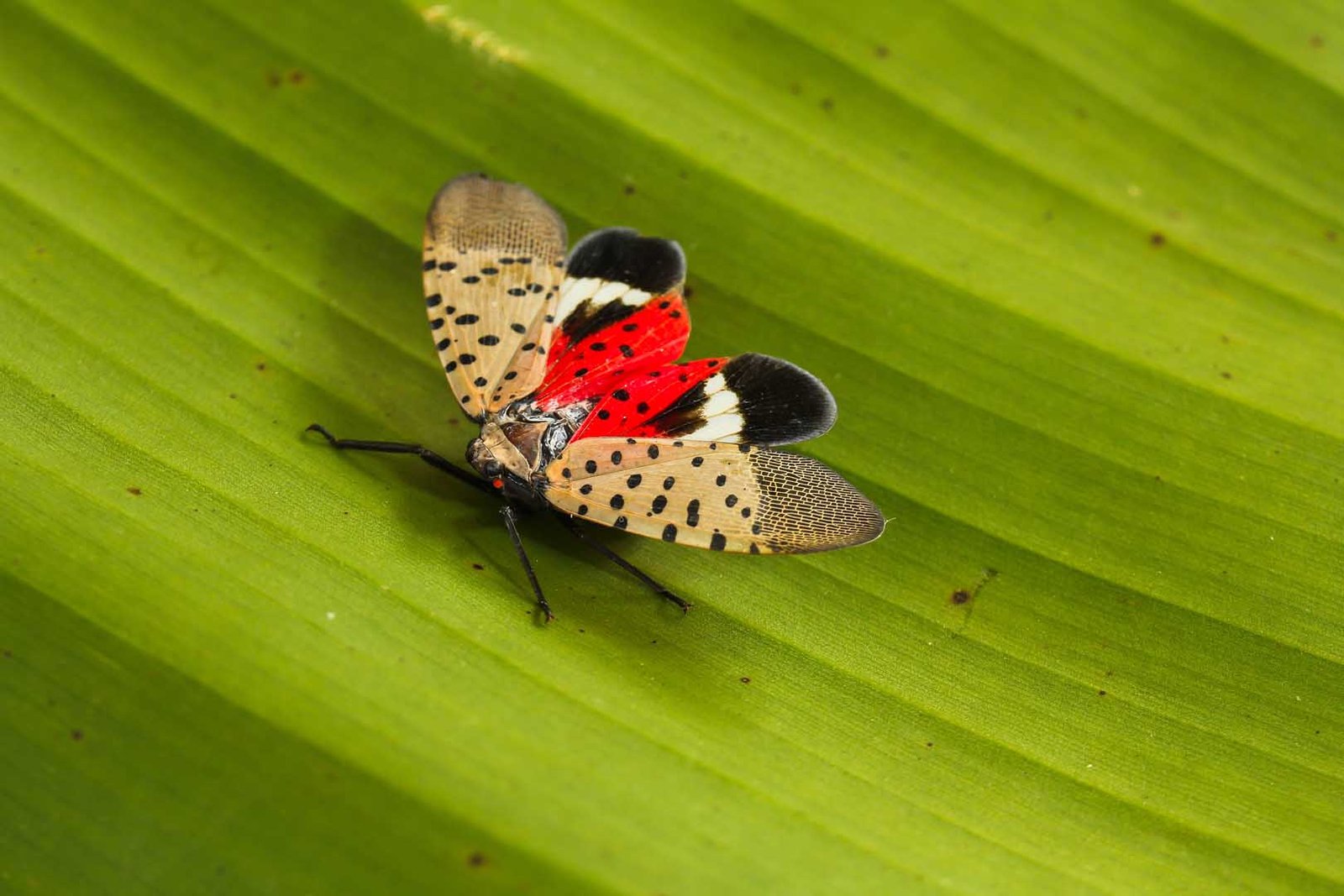
Spotted Lanternflies go through several stages of development called instars before becoming adults. Their appearance changes significantly throughout their life cycle.
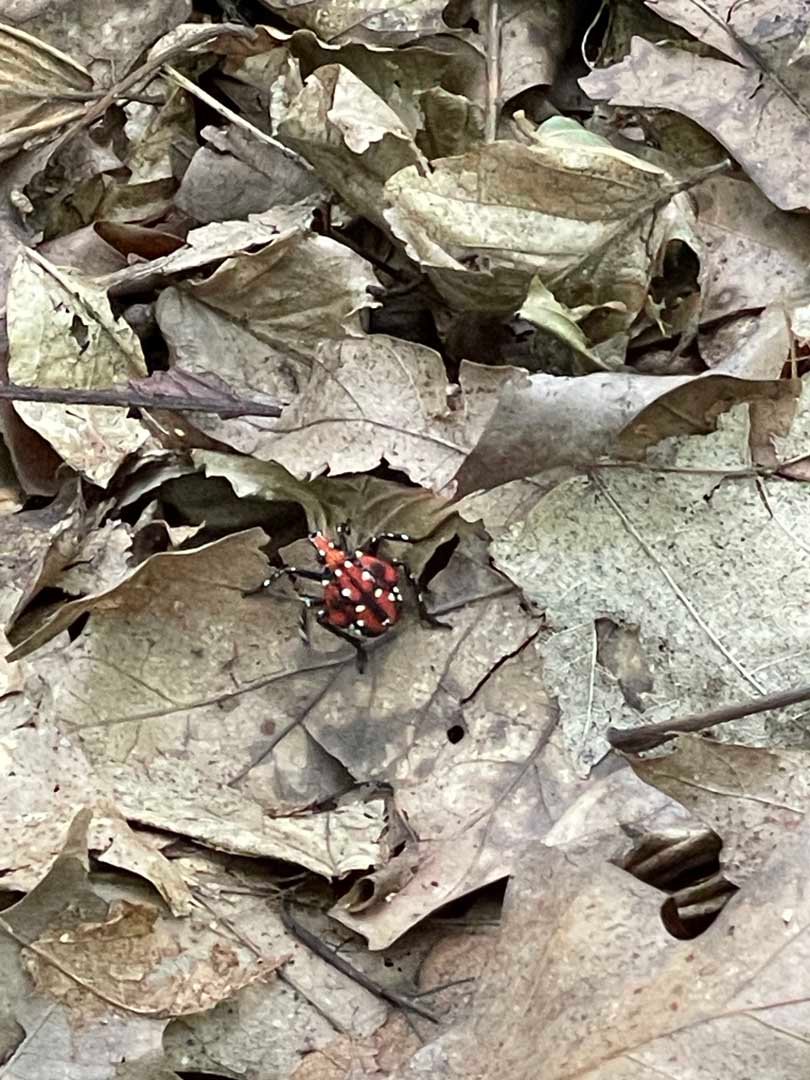
Young Spotted Lanternflies
Earlier in the season, young Spotted Lanternflies are black with white spots. They progress through three black-and-white instars as they develop.
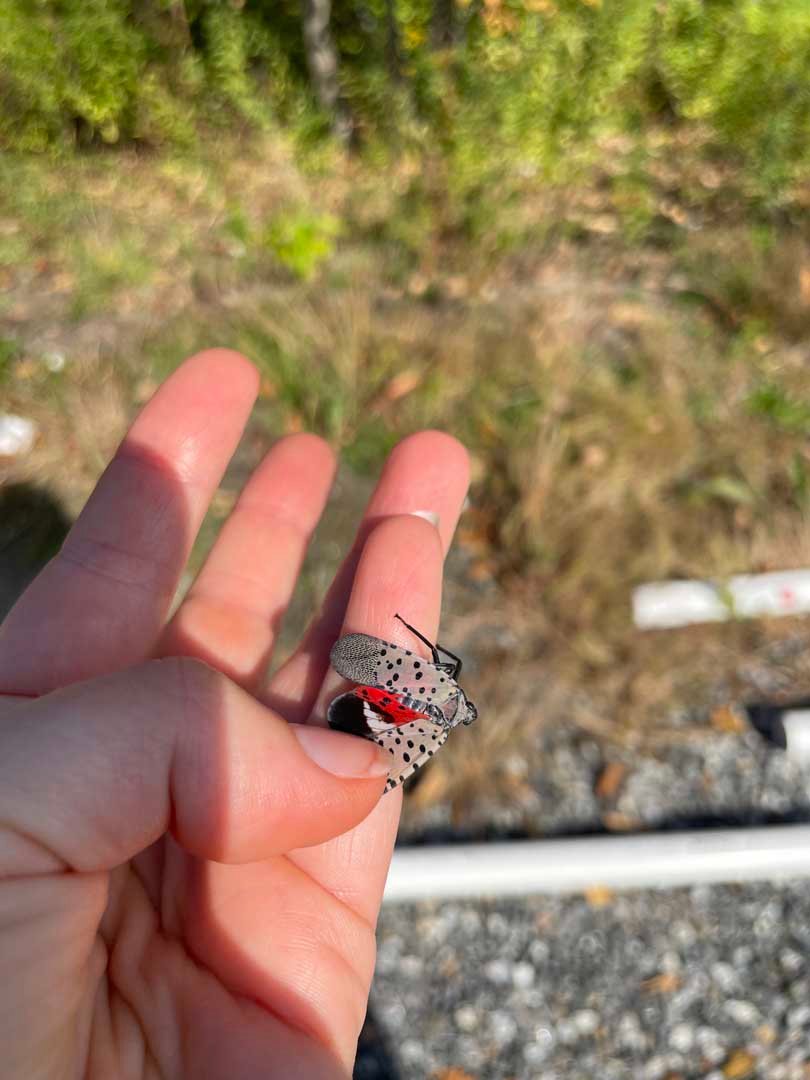
The Red Stage
The fourth instar is when the insect begins to turn red. At this stage, the insect has a red body with black and white spots and markings. This stage occurs around August and is the final immature stage before adulthood.
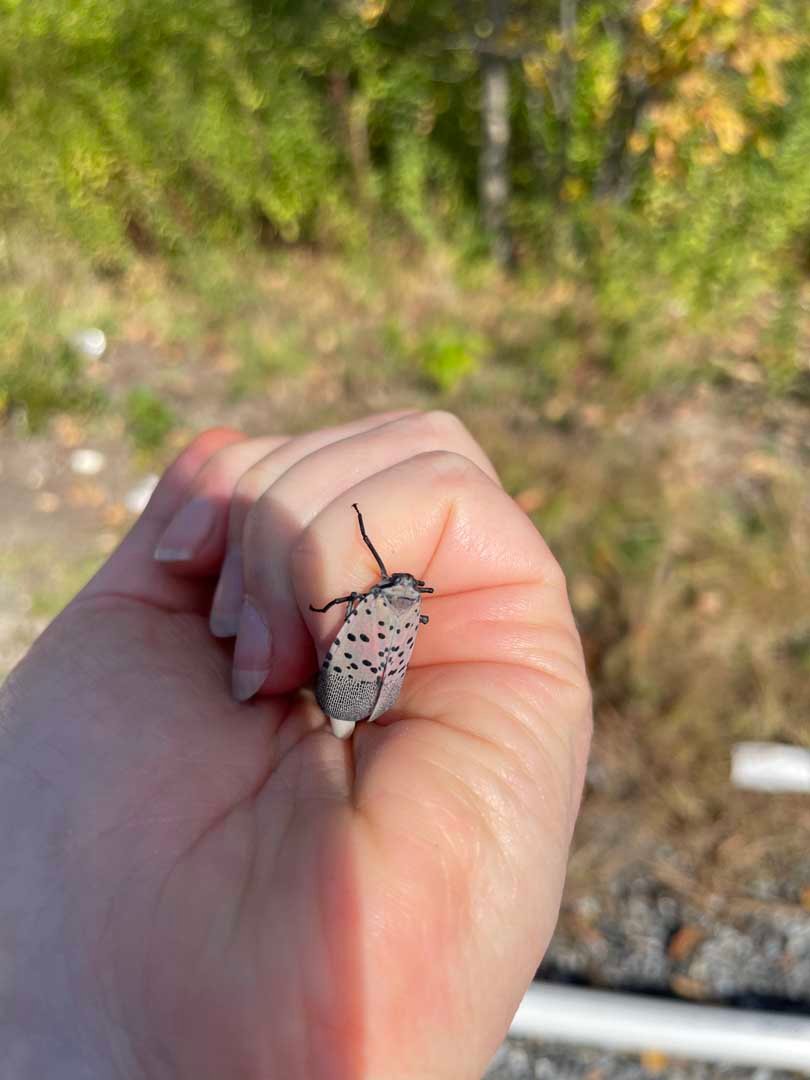
Adult Spotted Lanternflies
Adult Spotted Lanternflies develop wings and have a distinctive pinkish appearance with a red and yellow body. Their size and coloring make them relatively easy to identify once you know what to look for. Adults are generally present from September into the fall.
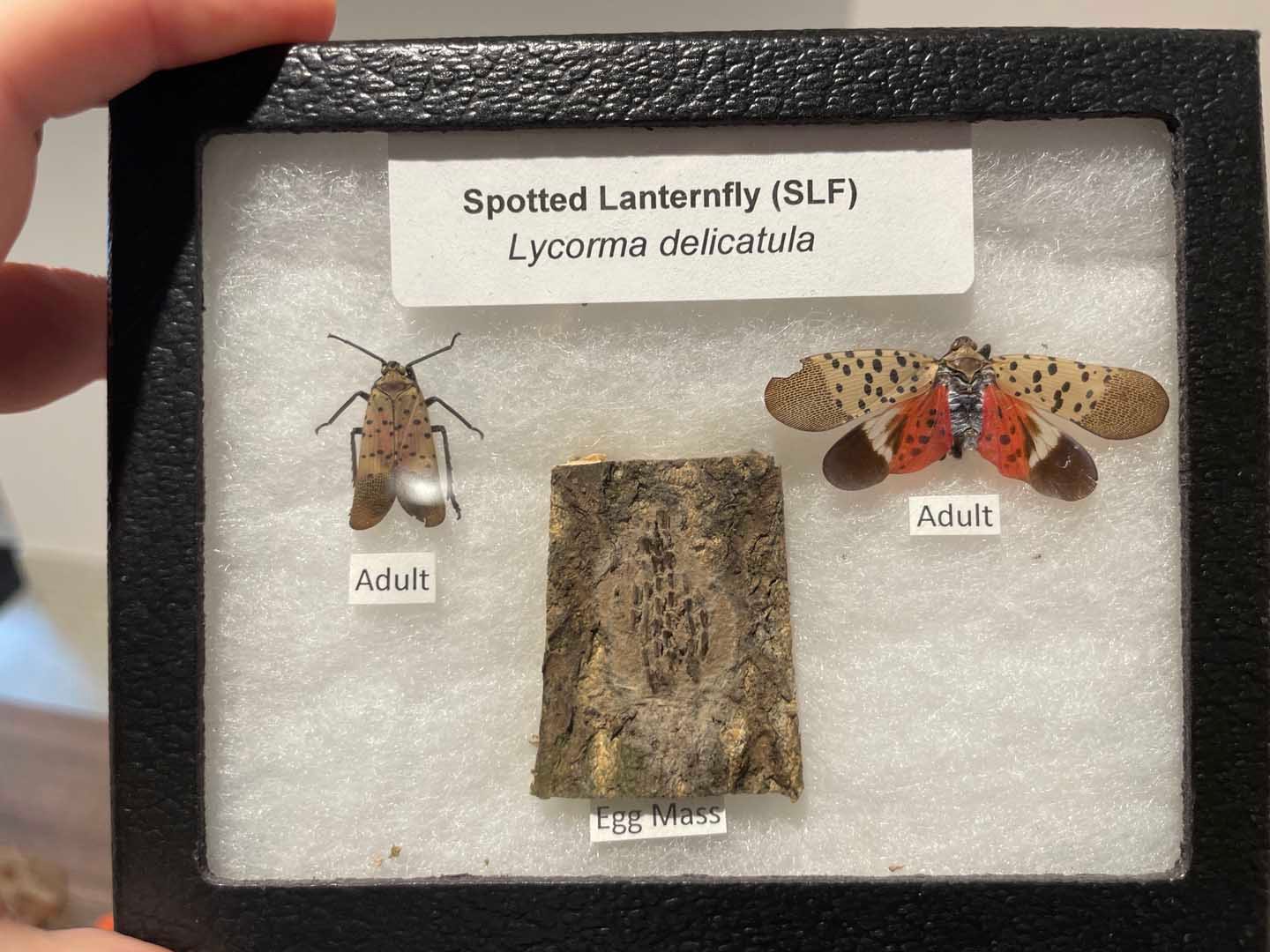
Understanding the Spotted Lanternfly life cycle can make it easier to identify these insects and recognize when they may be active on your property.
Spotted Lanternflies begin as eggs that overwinter on vertical surfaces. The first young insects hatch in early May and progress through several immature stages before becoming adults.
The general life cycle includes:
- Eggs that overwinter through the winter
- Three black instars with white spots
- A fourth red instar with black and white markings
- The adult winged stage
- Egg laying before the first frost
- Overwintering eggs that hatch the following spring
Adults die after the first frost, but they lay their eggs before that happens, allowing the next generation to begin the following spring.
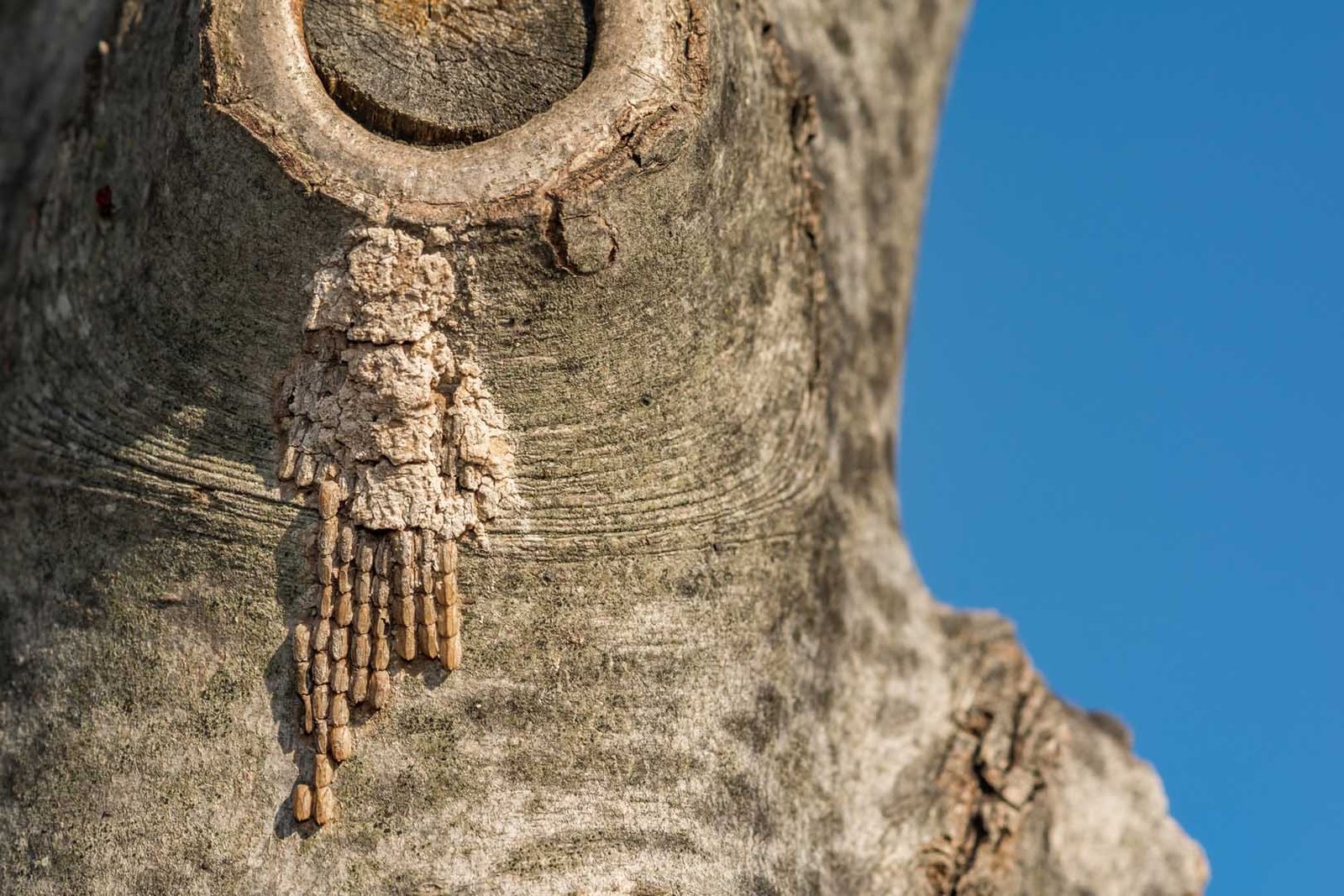
Spotted Lanternfly egg masses can be surprisingly difficult to see.
They lay their eggs on vertical surfaces, including:
- Tree bark
- Rocks
- Sheds
- Vehicles
- Other outdoor structures
The egg masses are generally grayish in appearance and can blend into the surface where they are laid. On tree bark, they can be particularly difficult to spot because their coloring can resemble the natural gray color of the bark.
If you notice a gray, irregular-looking mass on a vertical surface, it may be worth having it identified.
Spotted Lanternflies have a preferred host known as the Tree of Heaven. This tree is particularly important to Spotted Lanternfly populations and is commonly found in disturbed soils and developed areas.
Tree of Heaven is common in parts of Massachusetts but is found at a lower density in New Hampshire.
Spotted Lanternflies can also feed on a wide range of other trees and plants, including:
- Maple
- Walnut
- Beech
- Willow
- Black cherry
- Hickory
- Linden
- Dogwood
- Virginia creeper
- Mulberry
- Sumac
- Tulip poplar
- Cherry
- Apple
- Crabapple
- Other stone fruit
Spotted Lanternflies are generally considered a nuisance pest, but large populations can create problems for plants and the surrounding landscape.
They feed on plants and can cause defoliation, particularly when populations become high.
Another concern is the sticky substance they produce while feeding, known as honeydew.
Honeydew can accumulate on:
- Vehicles
- Decks
- Outdoor furniture
- Plants
- Walkways
- Other surfaces beneath an infested tree
Large populations can therefore create both plant health concerns and significant nuisance conditions around your property.
Spotted Lanternflies can be difficult to completely eradicate once they become established. For this reason, management and population suppression are important goals.
Foliar applications are one treatment option, particularly when Spotted Lanternflies are present in high numbers.
Treatment should be based on the level of activity and the plants being affected. A Certified Arborist can evaluate the situation and determine whether treatment is appropriate.
The goal is to suppress the population and reduce the impact on your trees and landscape.
Seeing one or two Spotted Lanternflies does not necessarily mean that your property has a serious infestation.
However, you should pay attention if you begin seeing:
- Groups of Spotted Lanternflies on your trees
- Large numbers of insects in one area
- Gray egg masses on tree bark or other vertical surfaces
- Sticky honeydew accumulating beneath trees
- Black sooty mold on plants or surfaces
- Defoliation or stress on affected plants
- Large populations can sometimes include dozens or even hundreds of insects.
If you are unsure what you are seeing, a Certified Arborist can help identify the insect and assess the situation.
Spotted Lanternfly Frequently Asked Questions
What is a Spotted Lanternfly?
Spotted Lanternfly is an invasive insect that feeds on a wide variety of trees and plants. It is particularly associated with Tree of Heaven but can also feed on many other species.
Do Spotted Lanternflies bite?
No. Spotted Lanternflies do not bite people. They are primarily considered a nuisance pest because of their populations, feeding activity, and the honeydew they produce.
What does a Spotted Lanternfly look like?
Their appearance changes as they develop. Young Spotted Lanternflies are black with white spots. Their fourth instar develops red coloring with black and white markings. Adults develop wings and have pink, red, yellow, black, and white coloring.
When do Spotted Lanternflies appear?
The first young Spotted Lanternflies generally hatch in early May. They develop through several immature stages before becoming adults later in the season. Adults are generally present from September into the fall and die after the first frost.
Where do Spotted Lanternflies lay their eggs?
They lay their eggs on vertical surfaces such as tree bark, rocks, sheds, vehicles, and other outdoor surfaces. Their grayish egg masses can be difficult to see because they often blend into the surface.
What trees do Spotted Lanternflies prefer?
Tree of Heaven is their preferred host. They can also feed on maple, walnut, beech, willow, black cherry, hickory, linden, dogwood, Virginia creeper, mulberry, sumac, tulip poplar, and several stone fruit trees.
Can Spotted Lanternflies affect my trees?
Yes. Spotted Lanternflies feed on trees and plants and can contribute to defoliation and plant stress, particularly when populations are high.
What is honeydew?
Honeydew is a sticky substance produced by Spotted Lanternflies as they feed. It can accumulate on vehicles, decks, plants, and other surfaces beneath infested trees.
What is sooty mold?
Sooty mold is a black substance that can develop where honeydew accumulates. Heavy buildup on plant leaves can interfere with photosynthesis and add stress to understory plants.
Can Spotted Lanternflies be completely eradicated?
Complete eradication can be difficult once Spotted Lanternflies become established. Treatment is generally focused on managing and suppressing populations rather than guaranteeing complete eradication.
How do you treat Spotted Lanternflies?
Foliar applications can be used to suppress Spotted Lanternfly populations when treatment is appropriate. A Certified Arborist can evaluate the infestation and recommend the appropriate approach based on the population and affected plants.
Should I be worried if I only see a few Spotted Lanternflies?
Not necessarily. A few insects do not automatically indicate a severe infestation. However, if you begin seeing increasing numbers, groups of insects, egg masses, honeydew, or sooty mold, it is worth having the situation evaluated.
When should I call an arborist?
If you are seeing large numbers of Spotted Lanternflies, are unsure whether an insect or egg mass is a Spotted Lanternfly, or are concerned about the health of your trees, a Certified Arborist can help identify the issue and determine whether treatment is appropriate.
Spotted Lanternflies are becoming an increasingly important concern throughout our region. While they are not dangerous to people, established populations can create significant nuisance conditions and put additional stress on trees and plants.
Port City Tree Care provides professional assessment and treatment recommendations based on the specific conditions on your property.
Our Certified Arborists can help you identify Spotted Lanternflies, assess population levels, and determine whether treatment or continued monitoring is appropriate.
Protect the Health of Your Trees
Port City Tree Care provides science-based tree and shrub health care throughout Seacoast New Hampshire, Southern Maine, and Northern Massachusetts.