

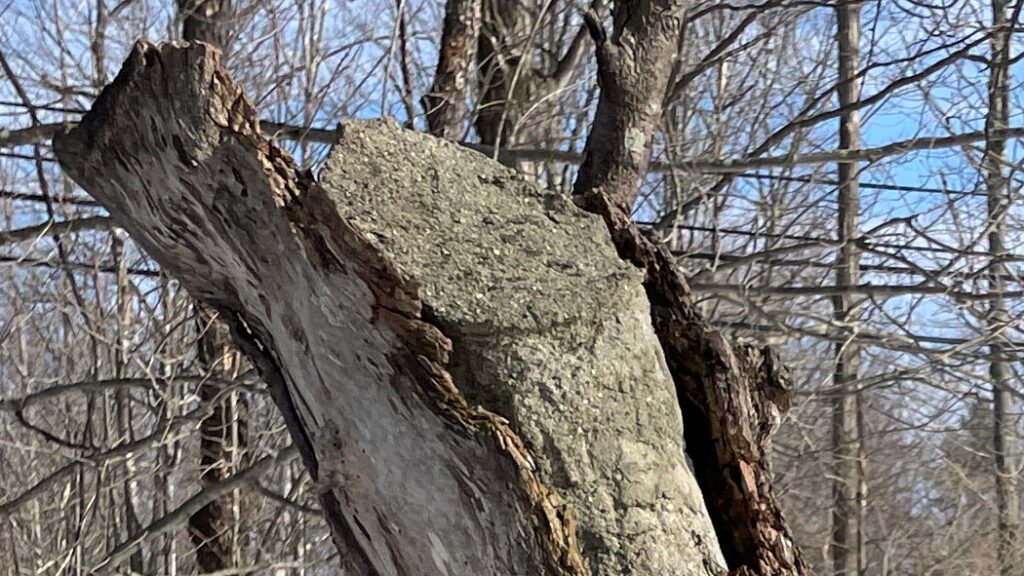
Like outdated medical practices such as bloodletting and lobotomies, arboriculture has its own discarded methods. Some approaches, though less shocking than lobotomies, are still questionable when critically examined. Techniques such as cavity filling and wound sealing, while other methods remain under review or are reserved for rare situations. So let’s chat about caring for wounds on trees.
Should you fill the cavity of a tree with cement or bricks to improve the stabiliy of New Hampshire, Maine, & Massachusetts Trees?
Absolutely not. Cavity filling was very popular in the early 1900s and was a commonly used practice until the 1970s. It was thought that filling the cavity of a tree with cement would improve the stability of the tree. Leaving it safer for the tree owner. The practice of filling cavities for trees was quickly retired in the span of only 70 years because it was found to increase and exacerbate decay within trees as a result of retaining excess moisture. The trees with filled cavities failed. As a result it is fairly rare when we come across trees with cement that need to be removed, because they have decayed and dismantled quickly.
What do you do with a tree that has a cavity near my home or car?
It depends. First things first, have an arborist come out that can assess tree risk. Often you can reduce risk with treatments and weight reduction pruning. However, If the decay is significantly advanced, then it may be time to remove the tree.
Should wound sealant be used after pruning my tree or shrubs in New England?
This is another retired practice in arboriculture. Not as widespread or noted as cavity filling. Most parts of the country do not use wound sealant because it reduces the trees natural responses to healing. When a tree receives a proper pruning, it immediately starts the healing process (if it is not dormant – then it starts healing as soon as spring begins). This process is called the Compartmentalization of Decay in Trees (CODIT). The tree naturally starts walling off cells to prevent cellular death. Over time it adds wound wood to the cut to seal the cut. By putting on sealant you are trapping moisture and inviting more decay into the wood there by increasing the likelihood of failure in your tree.
When would it be okay to use wound sealant on a tree on my trees in New Hampshire?
While this is generally not recommended, there are a small handful of exceptions. The exception is if you live in an area that has Oak Wilt or high pressure from Dutch Elm Disease and you cannot prune in the wintertime. Then wound sealant is used to reduce the likelihood that disease will enter the tree during the growing season through the wound. If you live in New Hampshire or Massachusetts seacoast you do not and should not need to use wound sealers.