

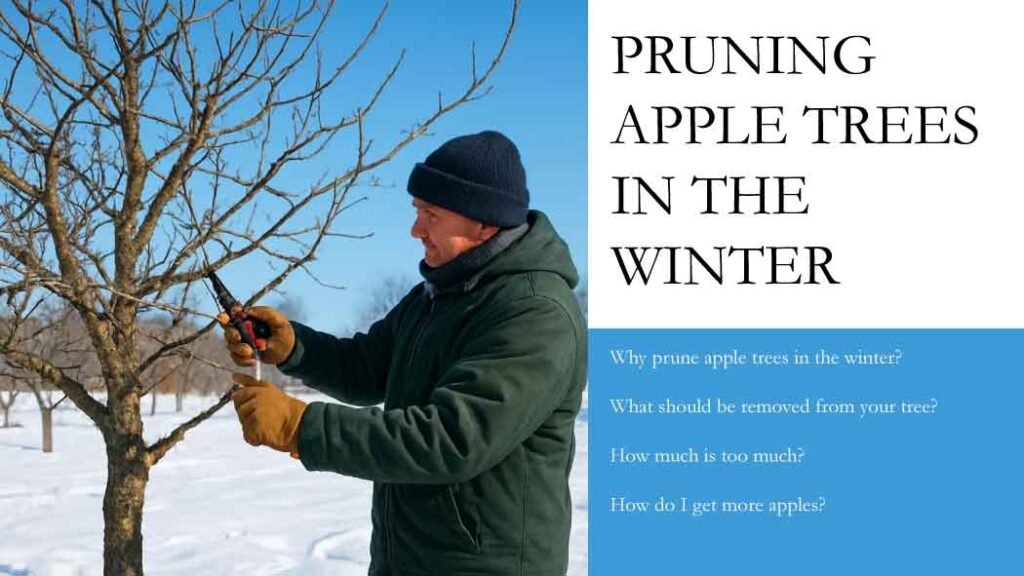
January marks peak apple tree pruning season—a productive and thoughtful task when other plant care is limited. Proper pruning in winter is vital for apple tree health, just like fertilization. This article covers why dormant-season pruning matters, what to look for when cutting, how much to remove, and how to encourage your apple trees to produce more.
Why prune apple trees in the winter?
Pruning apple trees in winter prevents fruit loss and helps stored root energy support new blooms and heal wounds when spring arrives. This timing also reduces stress, much like tackling major tasks early. Winter pruning limits the spread of diseases such as Fire Blight by allowing the tree to compartmentalize wounds before warmer temperatures promote infection.
What should I remove when pruning apple trees?
Begin by removing dead and diseased branches. Next, focus on shaping the tree while maintaining plant health: ensure branches have enough space to prevent crowding as the tree grows, and remove those that cross to improve air flow and reduce disease risk. For young trees, decide where to position the lowest and highest branches based on how you want to access fruit or mow beneath the tree. It is also sometimes important to consider a central leader for structure.
How much is too much when pruning your apple tree?
The appropriate extent of pruning has been a subject of considerable discussion within the industry. Excessive removal of foliage can compromise the tree’s health, as leaves are essential for photosynthesis and overall vitality. Conversely, insufficient pruning may hinder growth objectives and increase susceptibility to disease. The recommended amount of pruning also varies depending on the tree’s management history; trees that have not previously been pruned often benefit from, and can withstand, more substantial pruning, while those subject to routine maintenance typically require less intervention. A commonly accepted guideline is to remove only 20–30% of the tree’s canopy. Achieving this target can be challenging during winter months. Therefore, if there is any uncertainty regarding proper technique—particularly with young or never-before-pruned apple trees—it is advisable to consult a professional arborist for assistance. It is essential to engage a certified arborist, rather than a landscaper, as the precision and quality of pruning are critical. Improper cuts—such as cutting into the branch collar or leaving poor angles—can significantly increase the risk of disease affecting your tree.
How do you encourage more apple production?
What a loaded question!
Apple production requires attention to soil, sunlight, fertilization, water, and pest management—not just pruning. Differentiate between flower buds (larger, clustered) and leaf buds (single). After structural pruning, use heading and reduction cuts to remove old, unproductive branches or those with excess fruiting buds. Avoid cutting all growth from last year, as apples grow on wood that is 2–4 years old.
If you’re unsure, please contact a certified arborist to help you manage your fruit trees for you.